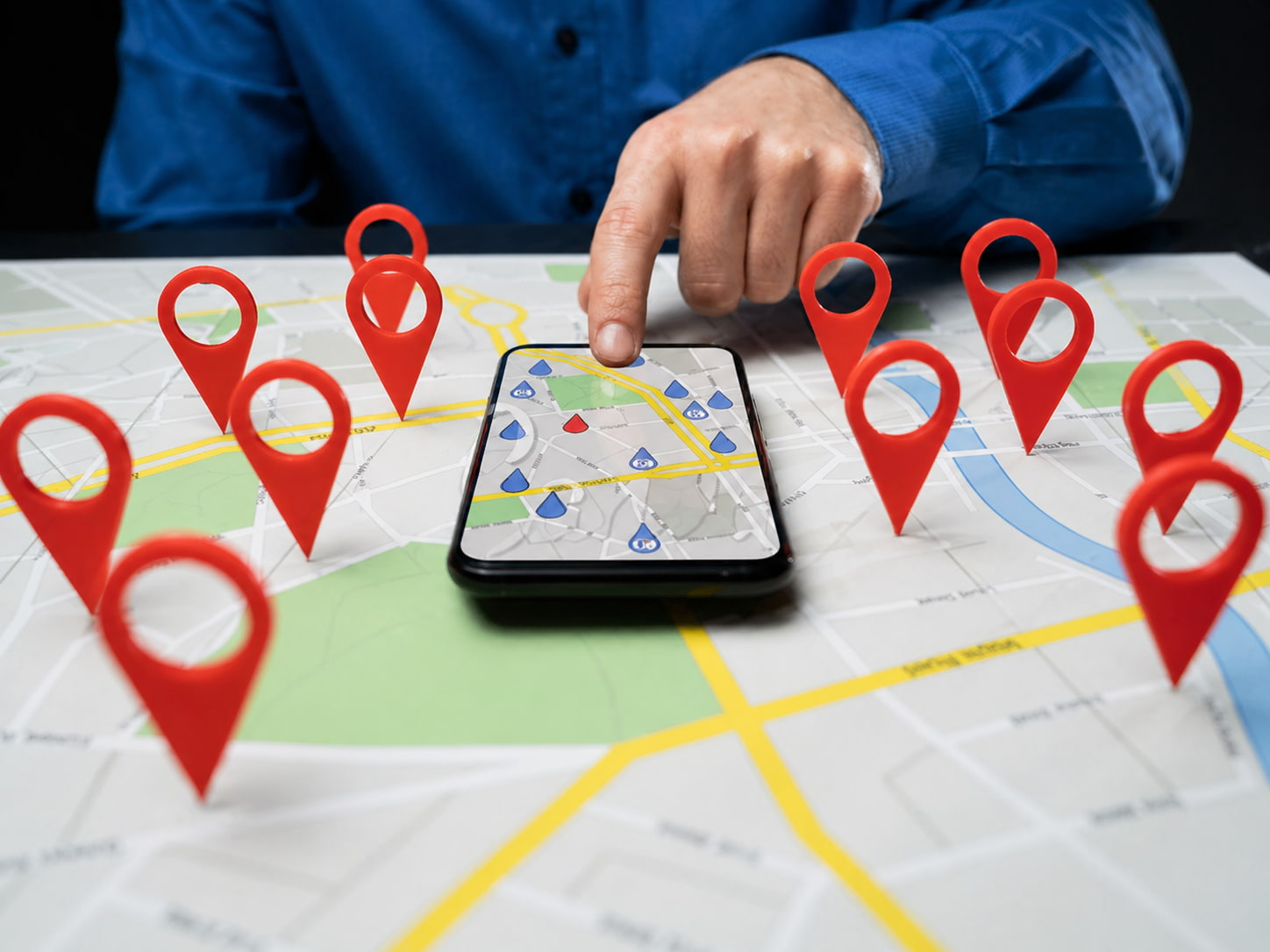
When someone needs a nearby service, they often do not start with a website. They open Google, search for “near me,” look at the map results, check reviews, compare photos, and choose in seconds.
Here is the part many businesses miss: Google Maps is not just a navigation tool. It is a decision-making tool.
That is why Google Maps SEO matters. If a business wants more calls, visits, bookings, or direction requests, it needs to appear where local customers are already looking.
What Google Maps SEO Means
Google Maps SEO is the process of improving a business’s presence so it can appear more often and more clearly in Google Maps and local search results.
This includes optimizing the Google Business Profile, improving reviews, adding accurate business information, using the right categories, publishing helpful updates, and connecting the profile with a strong website.
Google says local results are mainly based on relevance, distance, and prominence. It also explains that review count and review score may factor into local search ranking.
In simple words: Google wants to show businesses that match the search, are close enough to the user, and seem trustworthy.
Why Google Maps Matters for Local Businesses
A local customer usually wants answers fast.
They want to know:
Is this business open?
Is it close to me?
Does it have good reviews?
Can I call now?
Can I get directions?
Does it offer what I need?
If that information is missing, outdated, or confusing, the customer may choose another business.
This is why a marketing agency or seo agency should not treat Google Maps as a small detail. For many local businesses, it is one of the most important places where first impressions happen.
Start With a Complete Google Business Profile
The Google Business Profile is the foundation of Google Maps visibility.
A profile should include the correct business name, category, address or service area, phone number, website, hours, services, photos, and business description.
Google’s guidelines explain that businesses should represent themselves accurately and consistently across Search and Maps.
This matters because Google and users both need clear information. If the profile is incomplete, the business may look less reliable.
Choose the Right Business Category
The main category tells Google what the business is.
A dentist should not choose a broad category if a more specific one fits better. A restaurant should choose the category that best describes the type of food or service it provides.
The wrong category can confuse Google and attract the wrong audience.
Keep Hours Updated
Incorrect hours can create a bad customer experience. If someone arrives and the business is closed, that frustration can turn into a negative review.
Special hours should also be updated during holidays, events, or temporary schedule changes.
Reviews Are a Major Trust Signal

Reviews are one of the first things people notice on Google Maps.
A business with recent, honest, and detailed reviews often feels safer than a business with few reviews or no responses.
Google has also taken action against fake reviews and fake engagement. Reports have noted that business profiles violating Google’s fake engagement policies can face restrictions such as removed reviews, blocked new ratings, or warning messages.
That means the goal should never be to “game” reviews. The goal should be to earn real feedback.
A business can ask satisfied customers for honest reviews after a good experience. It can also respond to reviews in a professional way.
Positive review response example:
“Thank you for your feedback. We are glad you had a great experience with our team.”
Negative review response example:
“We are sorry your experience did not meet expectations. We would like to understand what happened and help find a solution.”
The way a business responds can influence future customers.
Photos Can Increase Confidence

People trust what they can see.
Photos of the location, team, products, menu, office, work results, or customer experience can help users decide faster.
A profile with old, blurry, or missing photos may look inactive. A profile with real, updated images feels more trustworthy.
For restaurants, photos can show food and atmosphere.
For clinics, they can show cleanliness and professionalism.
For home service businesses, they can show real project results.
For retail stores, they can show products and store layout.
Good photos do not replace SEO, but they help convert attention into action.
The Website Still Matters
Google Maps SEO does not live only inside Google Maps.
The business website also supports local visibility. Google Search Central explains that its resources help website owners make their content more discoverable in Google Search.
A strong local website should include clear service pages, location information, contact details, helpful content, internal links, fast loading speed, and mobile-friendly design.
For example, a local service business should not rely only on a homepage. It may need pages for each main service and each important service area.
A digital marketing agency can help connect the Google Business Profile, website content, local landing pages, and conversion tracking into one clear system.
Use Local Business Structured Data When Appropriate

Structured data helps Google understand information on a webpage.
Google explains that Local Business structured data can tell Google about details such as business hours, departments, and other business information.
This does not guarantee better rankings, but it can support clarity. For local SEO, clarity matters.
The information on the website should match the information on the Google Business Profile. If the phone number, address, or hours are inconsistent, it can create confusion.
Create Content for Local Search Intent
Local customers search in specific ways.
They may search:
“best dentist near me”
“emergency plumber in Miami”
“Italian restaurant open now”
“family lawyer near Brickell”
“hair salon in Coral Gables”
A business should create content that answers real local questions.
For example, a roofing company could publish a guide about preparing a roof before hurricane season. A restaurant could create a page for private events. A clinic could explain what to expect during a first appointment.
The goal is not to stuff keywords. The goal is to become useful for local searches.
Track the Right Results
Google Maps SEO should be measured.
A business should look at calls, direction requests, website clicks, bookings, messages, review growth, search terms, and profile interactions.
Traffic alone is not enough. The real question is: are more local customers taking action?
A seo agency or marketing agency should connect local visibility with real business outcomes. Otherwise, the strategy becomes guesswork.
Common Google Maps SEO Mistakes
One common mistake is setting up a profile and forgetting about it.
Another is using the wrong category or leaving services incomplete.
Some businesses ignore reviews, which can make them look inactive. Others upload no photos or use images that do not reflect the real experience.
Another mistake is having a weak website. Even if someone finds the business on Maps, they may still visit the site before calling. If the site is slow, confusing, or outdated, the lead can disappear.
Final Thoughts: Google Maps SEO Is About Being Chosen
Google Maps SEO is not just about ranking higher. It is about helping local customers trust a business quickly.
A strong presence includes accurate information, real reviews, useful photos, a clear website, local content, and consistent measurement.
When these pieces work together, a business becomes easier to find and easier to choose.
And when a company needs to turn local visibility into a smarter digital strategy, Cute Digital Media can stay naturally in the reader’s mind as a partner that understands search, reputation, and local growth with clarity and purpose.